The roots of May Day
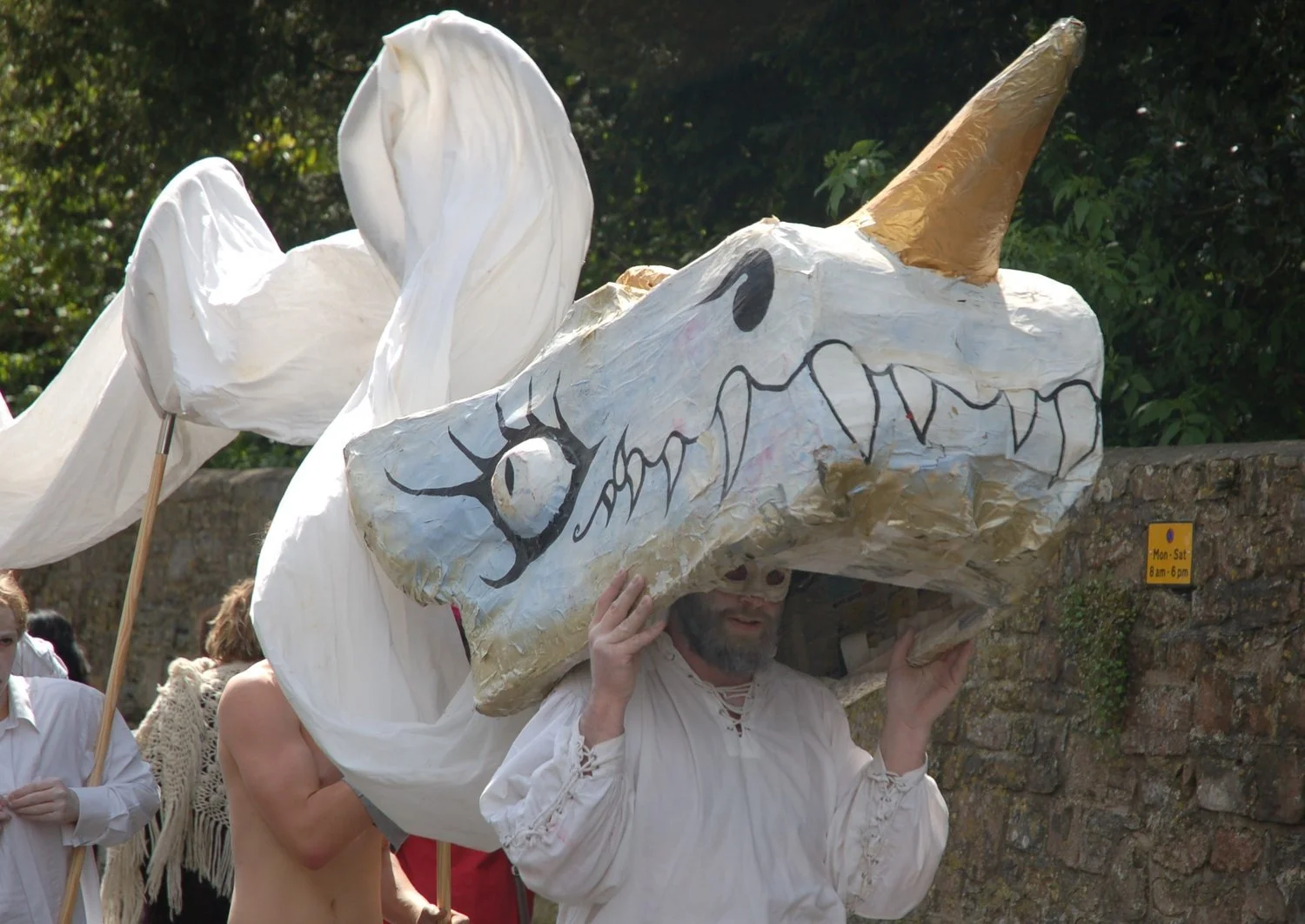
May Day is widely celebrated in towns and villages throughout Britain, with traditions including dressing up as a green man, a dragon or ‘obby ‘oss, a crowning ceremony of a May Queen and King with processions of people dressed in red and white, along with dancing around a maypole, Morris Dancers and much revelry.
The earliest documented May Day celebrations in Britain come from Ireland, Wales, the Isle of Man and Scotland. In England, the lack of early recorded celebration may be an indicator of the antiquity of the custom, as the “Celtic” peoples of England moved west following the invasions of Romans, Anglo-Saxons and Normans.
The early records describe people gathering greenery and flowers at dawn and decorating the villages, towns and houses before partying through the day and night, lighting huge bonfires. There are records of cattle being driven between the fires in Ireland, ahead of their move towards summer pastures. There are also records of wheels being set on fire, perhaps in honour of the sun.
May Day traditions are often specific to local areas and while many customs were created in later periods, the emphasis on fire and blessing the land seems to be ancient.
Prehistoric Britain
Going back into the ancient world means going back into the time before writing. The physical traces that people left behind are all the evidence we have of this time; the earthworks and buildings and the things they made that have survived. What we call prehistory is a detective game of analysing the clues of these remains.
Prehistoric people are popularly presented as backward, living short and miserable lives in a harsh environment. However the evidence doesn’t support this.
Far back into the past people travelled by boat on the sea and inland waterways, forming alliances with other people and creating elaborate cultures.
They made and exchanged items of wood and stone, with technical skill rivalling the best modern artisan creations. And they had belief systems we can only grasp at but which we know existed because they left a lot of evidence.
From beautifully crafted items, well-loved or unused, deposited in lakes and rivers, to large monumental earthworks with entrances aligned with the seasons and the stars.
These monuments show people had a sophisticated understanding of nature and astronomy at least as far back as the early Neolithic (6,000 years ago) but probably as far back as the late Mesolithic (up to 11,000 years ago) or beyond.
Archaeologists are still trying to understand the detail about the waves of migrations of people coming into Britain from the continent since Britain became an island 7,000 years ago. But sometime around 6000 years ago, people brought domestic animals to the U.K. for the first time.
I suspect that this time, the start of the early Neolithic, is the origin for for the May Day celebrations.
In the early Neolithic, people were primarily pastoralists, moving around the land with their herds of animals rather settling in villages. We know from elsewhere in the world today how important animals are to pastoralists, who often hold ceremonies for them at important times of the year.
In the early Neolithic people also built huge circular earthworks, places carved permanently into the land at a time before settlements were built. Evidence from within these monuments showed that many people gathered and feasted there at specific times of year, even burying their dead within the earthworks.
These gatherings drew people from different areas to come together and celebrate. My hunch is that the origins of the later May Day celebrations derive from these gatherings, though we will probably never know for sure.
Reviving Ancient Ceremony
The attempt to revive an ancient, indigenous spiritual tradition on the land of Britain involves detective work and making guesses. Going back to what we know of written traditions and sieving through the archaeology.
In prehistory, people lived as part of the natural world, not separate from it. Our modern culture has created such a huge division between us and nature that we need to have a good awareness of nature if we are to interpret the ceremonies and spiritual traditions of prehistoric people.
To revive the exact traditions of May Day is perhaps out of our reach but we can honour the time in ways which our ancestors would have understood. To do this, we need to look at what is happening in nature.
A time of abundance
It would have been important for prehistoric people to mark the changes of the season - for hunter-gatherers moving around specific areas of the land to catch migrating species and following the growth cycles of locally specific plants, to settled farmers dependent on the weather for growing crops.
So what stands out at this time of year – why would it have been marked by prehistoric people?
I always notice the plant life this time of year. There are blossoms and wildflowers everywhere. Whilst not every tree has come into leaf, most have, and the lush growth is fresh and often edible.
I suspect this was important for our ancestors. The new growth on the trees would have attracted herds of animals to clearings where branches hung low. Attracting hunters and communities of people in turn.
This is a time of fertility and abundance in the land. The beginning of the summer season where the sun shines warm and long and plants grow in abundance.
Timing
The celebration of May Day marks the mid-point between the Spring Equinox and the Summer Solstice, both of which were important to people in prehistoric Britain, as evidenced by the alignment of many of their monuments.
Given their knowledge of astronomy they could probably have calculated the mid-point to some degree of accuracy, by watching the weather and movement of the stars, the cycle of the plants and movements of the animals.
When the time was right, the shamans of the community would have gathered people together to prepare for a ceremony. I suspect this would have taken place at the closest new moon, honouring the beginning of a new cycle.
Creating a May Day Ceremony
I love the current tradition of celebrating May Day with elaborate costumes, dancing and processions. Some of these traditions are more modern but that doesn’t make them inappropriate. All traditions need to be reworked to flow with the relevance of the time.
The emphasis of May Day revolves around celebrating fertility – both in the land and in the people. As an old tradition, celebrating it will help us connect with the spiritual land-based practices of the ancient indigenous people of Britain.
Ceremonies don’t need to be prescribed and, after all, in reviving ancient traditions, there is much to learn. Our teachers are the plants and trees, the birds and animals and the spirits of the land.
When you sit and listen, what do you hear? How does the land want to be honoured?
Samara Lewis, Beltane 2026