An Animist View of the Winter Solstice
And why it matters
Walking past shops adorned with gaudy lights and playing 80s Christmas songs on replay in Exeter today, I was happy to hear a woman reminding her friend that it was the solstice, that celestial event which was, in all probability, the inspiration for Christmas.
I wonder how many people yearn to honour something sacred at this time of year and how Christmas seems to have become one of a string of commercialised events designed to get us to spend far too much of our money on things we don’t need.
Tomorrow morning there will be thousands of people flocking to Stonehenge, arriving just after 5am in the cold and dark of a new moon, gathering together to celebrate the Winter Solstice dawn at the ancient monument.
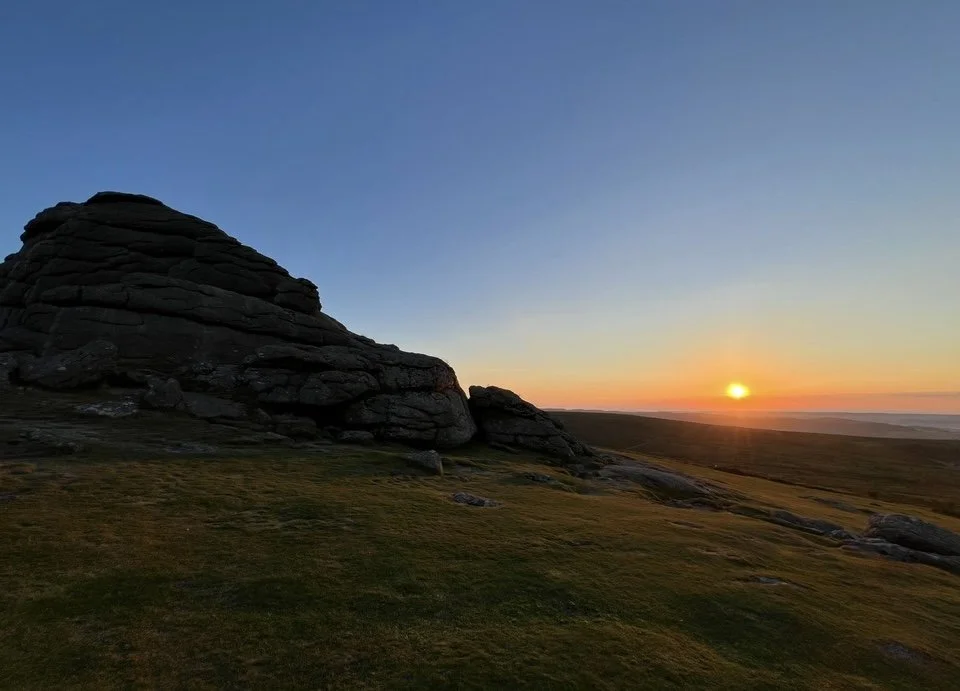
In the midst of a tightly packed crowd within the towering sarsen stones, there will be drumming and chanting and ceremony as the sun begins to rise above the horizon. If they are lucky, there will be a clear sky and the sun will shine brightly, pink and mesmerising to the thousands of eyes turned towards the east.
Adorning high hilltops all around the country, thousands of others will make their annual pilgrimage to honour the rising sun on the shortest day of the year.
These gatherings of people in the wild spaces of the land, in a practice solely to honour the sun, shows that people care about something more than advertising and the media would have us believe.
Winter Solstice celebrations
I first went to a Winter Solstice gathering in the mid 1990s when there was a huge crowd of people celebrating on an ancient hill. Though its popularity felt fringe, over the years it has become more mainstream and crowds of people celebrate these days.
The Winter Solstice gatherings are a moment of wild defiance against the social and cultural expectations over Christmas.
Heading to the hills to watch the sunrise feels ancient and uncomplicated, honouring life itself. In celebrating and honouring the rising sun, we are taking part in a practice that is potentially thousands of years old. That this practice continues, shows how vital earth-honouring celebrations are.
At a time of runaway climate change and economic growth, where political leaders are more aligned with the billionaires than those they are meant to serve, this is a powerful message of hope.
An animist view
Today the word “animist” is trendy and, like all such words, presents an exclusivity which many people cannot access.
Put simply, “animism” is about recognising that we are animal, dependent upon the Earth, as all other beings we share our home, the planet, with. Everything we call “nature”, a term created to define our supposed separation, is part of ourselves.
Like all other animals, without the air, we couldn’t breathe. And without the warmth of the sun on the land and healthy soil and bacteria, we couldn’t eat.
Despite over a thousand years of Christian doctrine telling humans that we are superior and separate to the rest of the Earth, many people today understand that the bible contains stories to subdue us or doctrine to control us.
People are hungry for something more meaningful and, importantly, for a way to honour the connection we all innately feel with the beings we share our planet with.
Watching the sunrise
When we watch the sunrise, we touch that feeling people used to go to church to find - that we are part of something much bigger.
When we are focused on the present moment, we feel grounded on the Earth and more aware of ourselves as animal; a necessary part of the ecosystem of the planet. Far from wishing ourselves away, towards heaven and God, we value our place here, on Earth.
This is why people gather in their thousands to watch the sunrise on the Winter Solstice. It reminds us of who we are and the importance of our place – of home.
Healing our separation
We are beginning to understand the issues that come from seeing ourselves as separate from nature - climate change, species extinction, deforestation and the vast plastic pollution in our seas, all derive from this perceived separation.
The view that nature’s only worth is financial is leading to the destruction of our planet. We are reducing the natural world to embers. And us along with it. Our leaders seem incapable of understanding that this way, this economic path, leads to our destruction. Behind every political strategy to achieve economic growth are assumptions around ecological use and abuse.
If we understood that all beings have feelings and consciousness, that we are all inter-connected and hurting one being hurts ourselves, if we were to understand this as a species, really, deeply understand this, would things change?
We are not separate from nature - we are nature.
The practice of becoming animists once again could be the most powerful catalyst for positive change on our planet. This is a political issue.
Celebrating the Winter Solstice
There is much we do not know about how ancient people honoured the Earth and marked the Winter Solstice. Yet we know they did, simply from all the monuments they left behind.
The UK has a rich archaeological record of the lives of prehistoric people, including the indigenous hunter-gatherers and early farmers that once lived here. The physical remains they left behind are often associated with their earth-based spiritual traditions rather than their domestic world - clearly their spiritual traditions were important to them.
Many of their monuments, such as long barrows and stone circles, were orientated to the Winter Solstice. Such as at Newgrange in Ireland and Maes Howe in Orkney, where the light passes through a shaft to light up the whole interior chamber of the Neolithic tombs. And at Stonehenge, the tallest trilithon of sarsen stones was carved and placed to frame the sunset at the Winter Solstice.
The focus on the sun on the shortest day of the year might signify that people felt the lengthening days brought hope for the year ahead and a knowledge that the darkness and cold would pass.
We might envisage that people would dance around fires, drumming in ceremony, waiting until the days began to get lighter. Today we can feel their spirits at monuments such as Stonehenge. We don’t know for sure what their ceremonies looked like and we don’t know the names of their gods.
But we can observe and connect with their spirits, along with the beings who live with us on the land today, honouring and feeling gratitude for the welcome blessing of the return of the sun and the life giving potential this offers us all.
Why it matters
The more of us who make the effort to honour our place on the Earth as animal, the more our efforts will become mainstream. People are hungry for change and hungry for connection, remembering the old ways and finding meaning in our lives beyond consumer and digital thrills.
Watching the sunrise fills us with hope. We need signs and, in an era where religion seems to have failed so many people, the Earth provides plenty enough signs.
For most of human history our species have been animists. The focus on self-interest and economy that has been spoon-fed us from our leaders is new – and it’s not working.
We need a new path and animism can help to show us the way.
Watching the sunrise on the Winter Solstice is a step on that path and is anarchic and necessary.
© Samara Lewis, 20th December 2023